THE WORD
Rus, rural, rustic
Dictionary.com traces rural through French to Latin rūs, "the country", first recorded in English between 1375 and 1425.
Indoors or out? doodlerus
00RUS: LATIN FOR THE COUNTRYSIDE
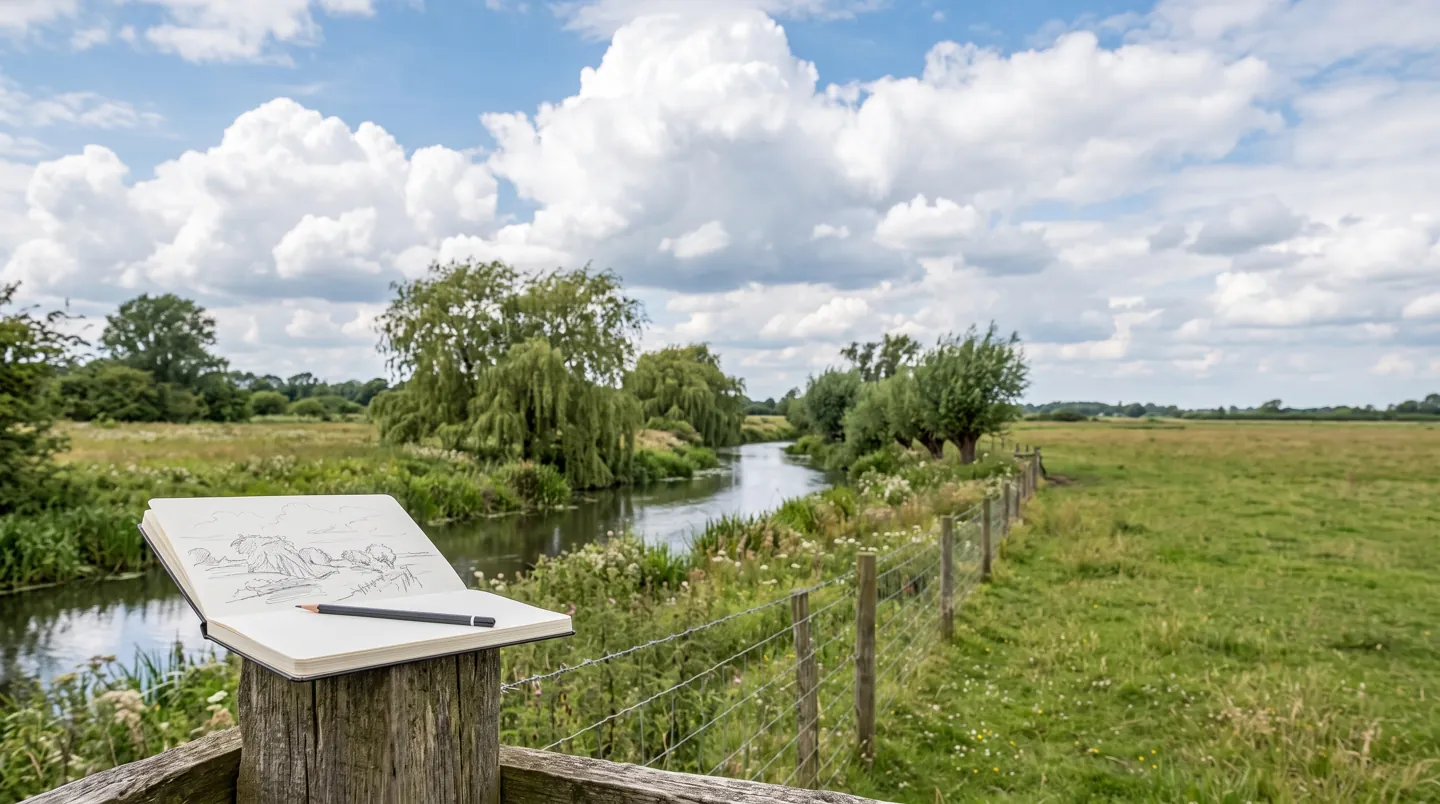
Rus is the Latin word for the countryside, and the root of our word rural.
Long before phone cameras, artists went out into fields and onto heaths to sketch the weather and the land, then carried those notes back to the studio. This independent guide explains how, from museum and gallery sources.
Indoors or out?01Principles
02THE SHORT ANSWER
For centuries, landscape art began outdoors.
Three ideas from the history of rural sketching.
THE WORD
Dictionary.com traces rural through French to Latin rūs, "the country", first recorded in English between 1375 and 1425.
Indoors or out?CLOUDS
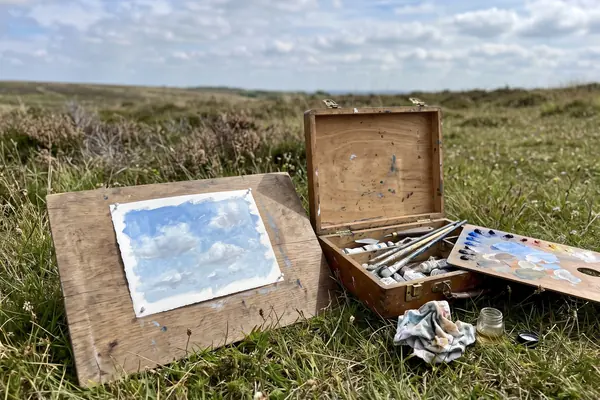
At Hampstead in 1821 and 1822 Constable painted cloud studies on the spot, often noting the time and weather on them, says the V&A.
See the numbersPLEIN AIR
Tate says painting whole finished pictures outdoors took off in the 19th century, helped in the 1870s by paint sold in tubes.
Try it yourself03INDOORS OR OUT?
Pick a kind of work to see how much of it happened in the open air. The bar shows how much was done outdoors, from the museum and gallery descriptions.
Based on Tate, the V&A and the National Gallery. The bar is our simple summary of their descriptions.
04TWO NUMBERS WORTH KNOWING
One figure for the size of an outdoor study,
one for what the finished pictures fetched.
24.8 × 29.8 cm
Size of one Hampstead cloud study
The V&A's Study of clouds and trees, painted in oil on paper in 1821 to 1822, is estimated at 24.8 by 29.8 centimetres: small enough to work on outdoors.
CLOUD STUDY · V&A
£250
Price for three paintings in 1824
In 1824 Constable sold The Hay Wain and two other works to a dealer for £250. Shown at the Paris Salon, they caused a sensation.
THE HAY WAIN · NATIONAL GALLERY
The National Gallery says Constable's earliest oil study of the farmhouse in The Hay Wain was probably painted in 1802, and he drew on three small oil sketches made in 1811.
05FOUR HABITS FROM THE OLD SKETCHERS
These are habits described in the museum records, not rules. A pencil and a small sketchbook are enough to start.
Outdoor studies were often small: the V&A cloud study is under 30 cm wide. Aim to catch the moment, not to finish.
Constable often noted the exact time and conditions on his cloud studies, so he knew what he had seen.
He sketched Willy Lott's farmhouse many times over the years before using it in The Hay Wain.
The Hay Wain was painted in a London studio from open-air sketches. Indoors and outdoors can work together.
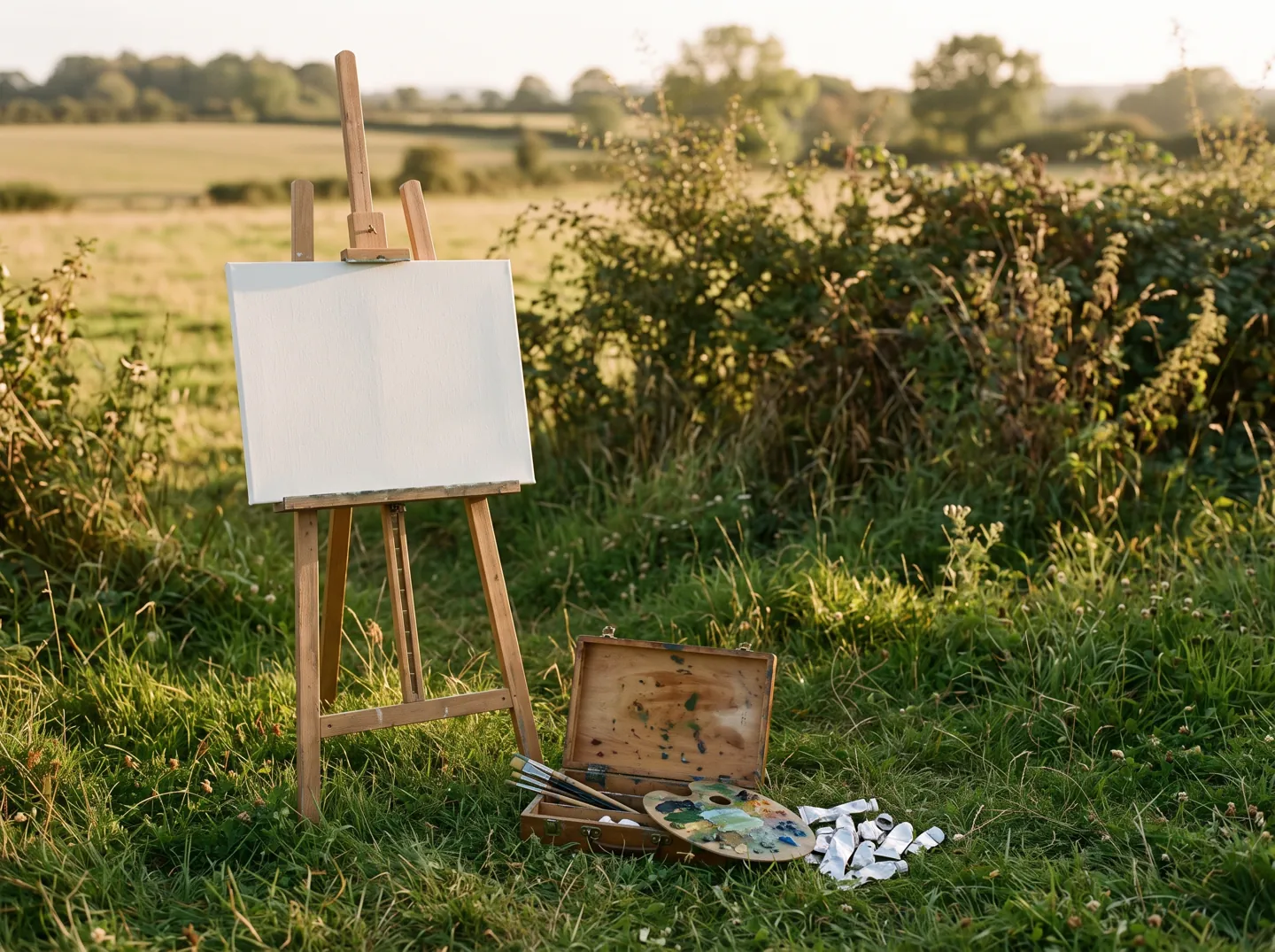
06THE PICTURESQUE
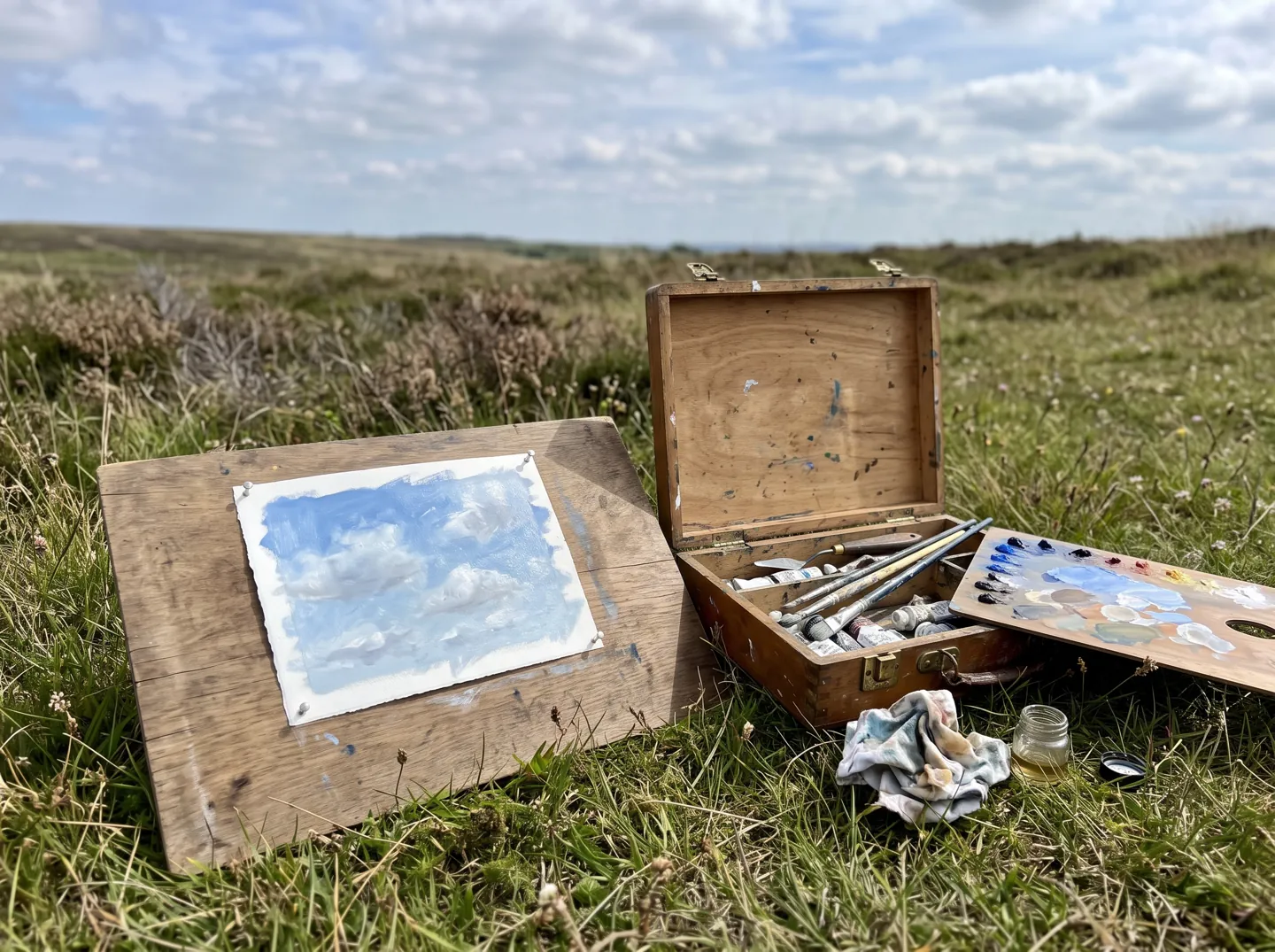
Tate says interest in landscape painting, and in looking at the landscape itself, grew rapidly in the second half of the eighteenth century. Writers sorted views into the sublime, the beautiful and, in between, the picturesque: artistic, but with some wildness or irregularity.
The theory was developed by William Gilpin, writing on the River Wye, and Uvedale Price, who published An Essay on the Picturesque in 1794. It helped send people out into the country to look, and to sketch.
07Questions
Rūs is Latin for the country or rural land. Dictionary.com says English rural comes, through Middle French, from Latin rūrālis, built on rūr-, the stem of rūs.
It is French for out of doors. Tate uses it for painting entire finished pictures outside, rather than only sketches.
No. The National Gallery says he painted it in his London studio, working from open-air sketches made over several years and a full-size preparatory oil sketch.
Tate says painting outdoors grew more popular in the 1870s once paints came in tubes. Before that, painters ground and mixed dry pigments with linseed oil themselves.
Tate describes it as an ideal type of landscape with artistic appeal: beautiful, but with some elements of wildness. William Gilpin and Uvedale Price developed the theory.
08Sources
ABOUT THIS NAME
doodlerus.com is part of the DoodleSale portfolio. It isn't in an auction right now, but you can ask about leasing it.